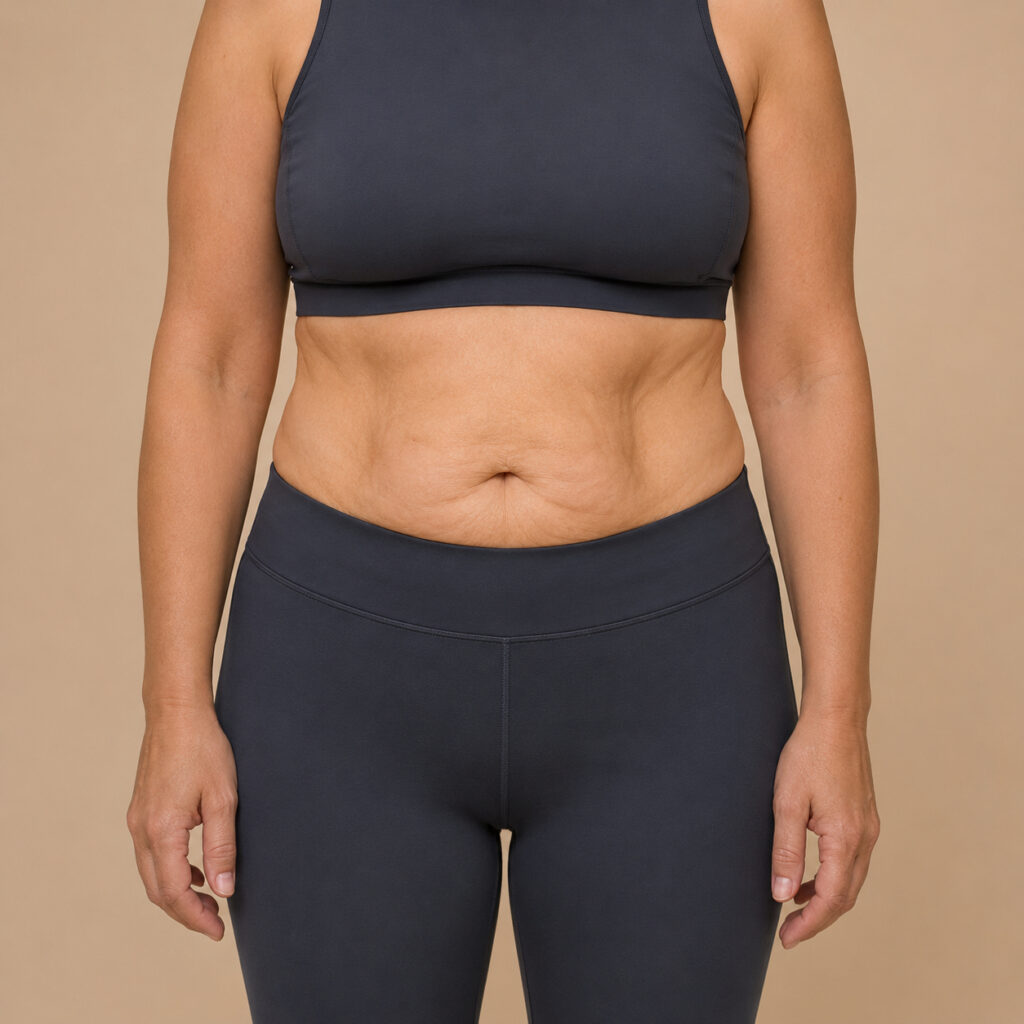
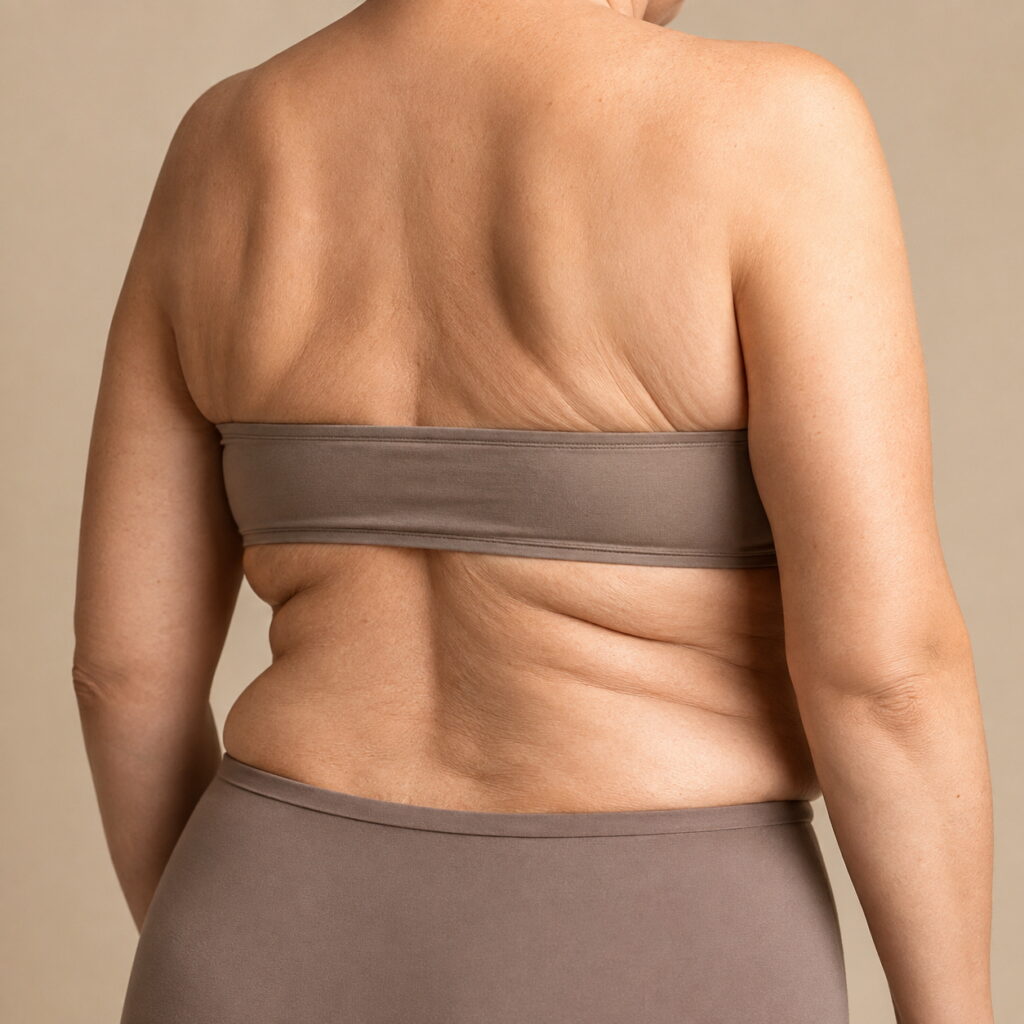
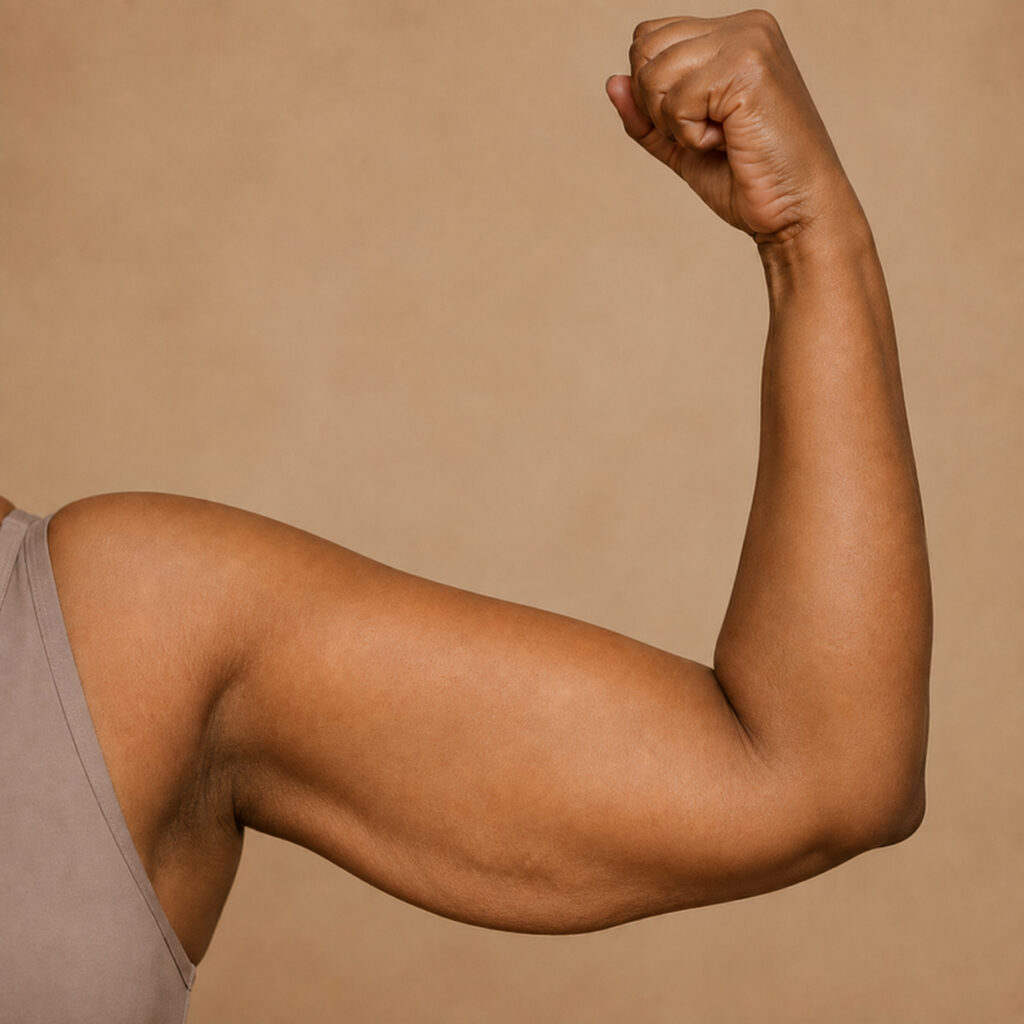
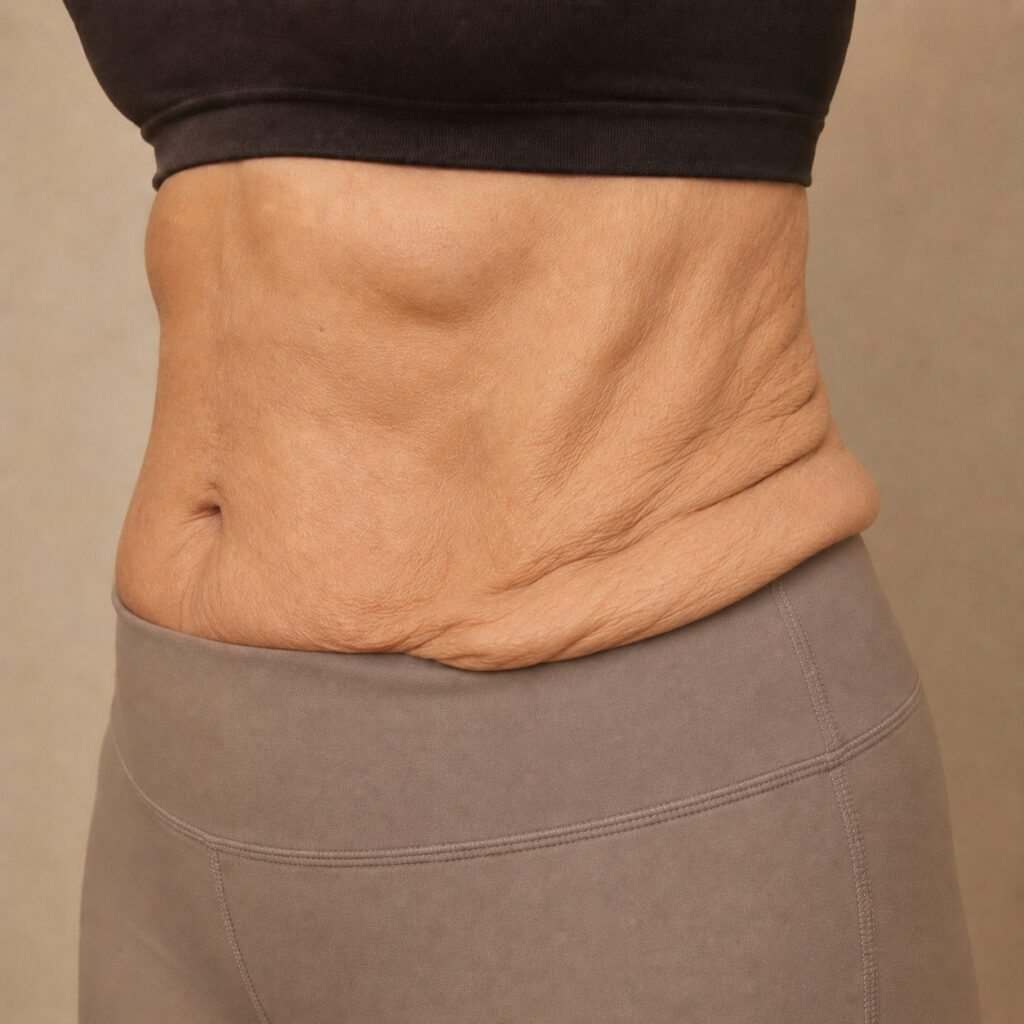
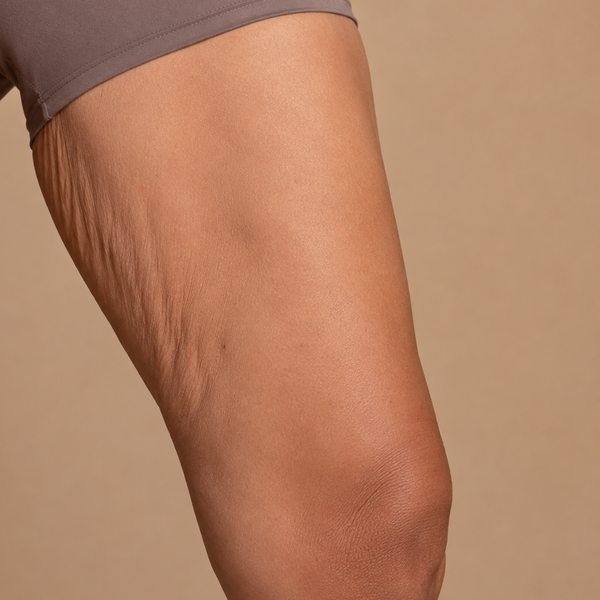
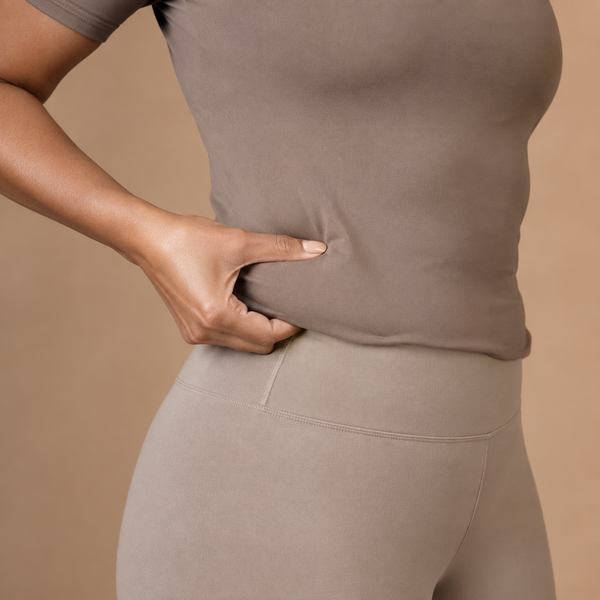
After significant weight loss, previously stretched skin may not fully conform to the body’s smaller shape. Loose skin after weight loss can remain around the abdomen, waist, back, breasts, chest, arms, buttocks, and thighs, sometimes forming folds that conceal the contours achieved through weight loss.

Substantial weight loss can reduce the volume that once supported the breasts, chest, buttocks, and surrounding tissues. As a result, these areas may appear flattened, lowered, or less defined. A customized combination of body-contouring procedures may lift, reshape, or restore support to the affected areas.
Excess skin following weight loss may rub, trap moisture, cause irritation, or interfere with exercise and everyday movement. Unevenly distributed skin and tissue can also make clothing difficult to fit, particularly when the proportions of the upper and lower body have changed differently.
Weight loss does not always affect every part of the body equally. One area may retain excess skin while another loses volume, creating an imbalance between the breasts, abdomen, waist, back, buttocks, arms, or thighs. Body contouring after weight loss can address multiple related areas to create smoother transitions and more balanced overall proportions.
Results Gallery
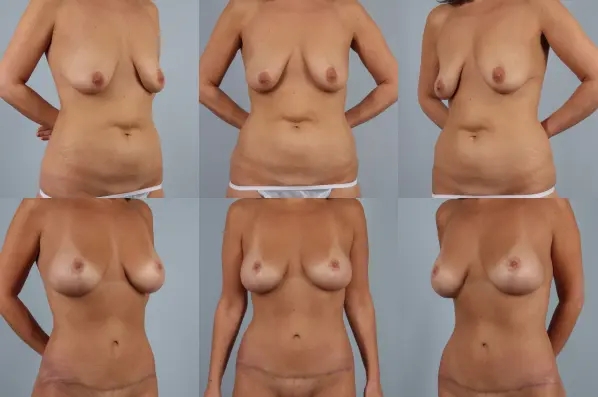
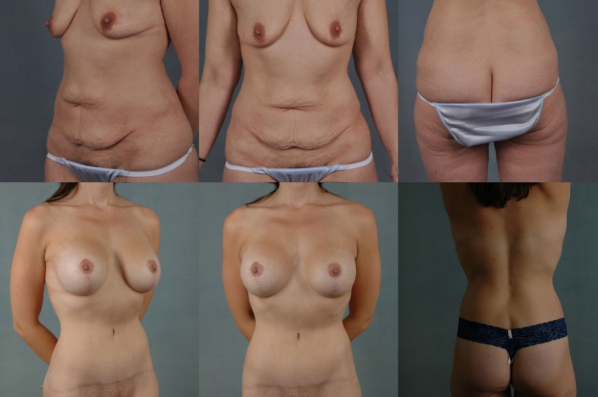
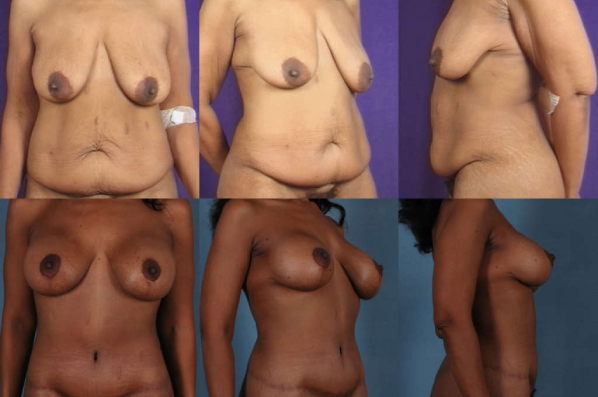
Total Body Lift Results
After significant weight loss, loose skin and tissue changes may extend across several areas of the body. A total body lift combines carefully selected breast and body-contouring procedures to reshape connected areas and restore more balanced proportions.
Weight Loss Makeover in New Jersey
Dr. Spiro’s approach
Post-weight-loss surgery involves more than identifying where loose skin remains. Dr. Spiro evaluates each layer of change from the skin and underlying tissue to muscular support and the relationship between surrounding body regions. This comprehensive approach informs a coordinated surgical plan designed to restore contour, structure, and proportion.
body contouring after weight loss
A Weight Loss Makeover,
Personalized to Your Body
No two bodies are affected by weight loss in exactly the same way. Some patients experience changes concentrated in one region, while others develop loose skin, tissue descent, and loss of proportion across the torso, breasts, arms, thighs, or buttocks. Dr. Spiro selects and coordinates the procedures needed to restore contour, support, and balance across the areas that matter most to you.

Upper-body transformation
Reshapes the breasts, chest, arms, and upper back as one connected aesthetic region. Depending on the patient’s anatomy, surgery may combine breast lifting or reshaping with an arm lift or upper body lift to restore support, definition, and proportion throughout the upper body.

lower-body transformation
Recontours the abdomen, waist, flanks, buttocks, and thighs to create smoother transitions throughout the lower body. Treatment may combine a tummy tuck, lower body lift, thigh lift, liposuction, or buttock auto-augmentation based on where skin, tissue, and contour require correction.

staged transformation
Provides a comprehensive approach for patients with post-weight-loss changes affecting both the upper and lower body. The surgical plan may involve a total body lift, multiple complementary procedures performed together, or a thoughtfully staged transformation completed over time—depending on the extent of correction, the patient’s priorities, and what can be performed safely.
Results Gallery
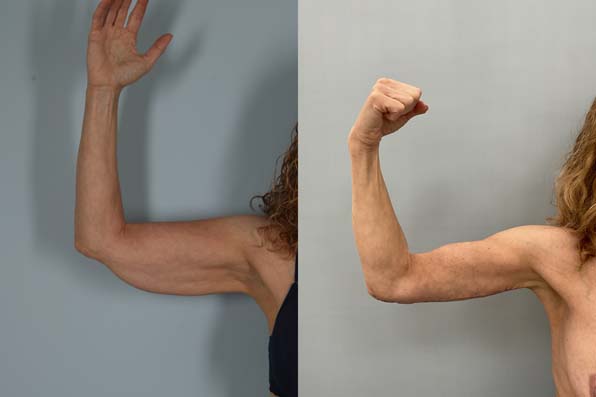
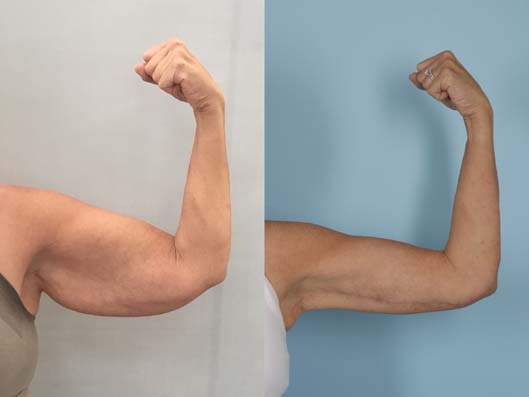
Arm Lift Results
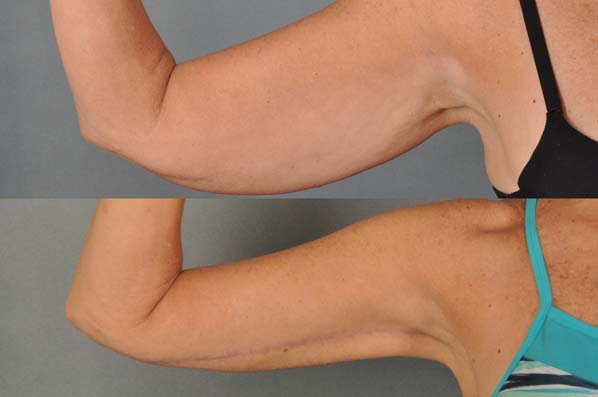
After significant weight loss, loose upper-arm skin can remain despite continued diet and exercise. An arm lift, medically known as brachioplasty, removes excess skin and reshapes the tissue from the underarm toward the elbow.
Weight Loss Makeover in New Jersey
the procedures behind the transformation
A Weight Loss Makeover is created by selecting and coordinating the procedures most appropriate for the patient’s anatomy. Some operations remove and redrape excess skin, while others lift descended tissues, restore volume, and or repair underlying support.
The procedures below may be performed individually, combined when appropriate, or incorporated into a staged surgical plan.

tummy tuck
A tummy tuck removes loose abdominal skin, repairs weakened or separated muscles when needed, and recontours the abdomen, waist, and pubic region. After significant weight loss, the procedure may be extended beyond a traditional abdominoplasty to address laxity continuing into the flanks or lower torso.

body lift
A body lift extends contour correction around the torso to address loose skin through the abdomen, waist, flanks, hips, lower back, buttocks, and outer thighs. The exact pattern is customized according to where laxity remains and how the surrounding regions should be lifted together.

upper body lift
An upper body lift addresses loose skin and tissue across the upper back, bra-line region, lateral chest, and surrounding torso. It may be coordinated with breast or arm surgery to create smoother transitions throughout the upper body rather than correcting each area in isolation.

arm lift
An arm lift removes hanging upper-arm skin and reshapes the tissue from the underarm toward the elbow. Dr. Spiro may incorporate liposuction when appropriate to improve definition and create a smoother transition between the arms, shoulders, and lateral chest.

Breast Lift
Weight loss can leave the breasts lowered, deflated, or disproportionate to the patient’s smaller frame. Breast surgery may lift and reshape the existing tissue, restore upper-breast fullness with an implant or fat grafting, or reduce remaining volume to create a more supported and balanced contour.

Thigh Lift
A thigh lift removes and redrapes loose skin affecting the inner or outer thighs. Depending on the pattern of laxity, it may be incorporated into a lower body lift or performed separately to improve leg contour and create a smoother transition into the hips, buttocks, and knees.

Buttock lift
When weight loss leaves the buttocks flattened or lowered, Dr. Spiro may preserve and reposition the patient’s existing tissue to restore shape and projection. Buttock auto-augmentation can be incorporated into a body lift to create fullness without relying exclusively on implants or fat transfer.

Liposuction & Fat Grafting
Liposuction may refine residual fullness and improve the transitions surrounding lifted areas, while fat grafting can restore volume where weight loss has left contours depleted. These techniques are used selectively to support the larger surgical plan—not as substitutes for removing significant loose skin.
body contouring after weight loss
combined vs. staged planning
Designing your Weight Loss Makeover involves more than selecting the right procedures. Dr. Spiro also considers how those procedures should be coordinated to support your safety, recovery, and overall result. Some complementary areas may be addressed together, while a more extensive transformation may be approached through a thoughtfully planned series of operations. When surgery is staged, each phase is intentionally sequenced so that every procedure builds upon the last—bringing the body closer to the balanced, cohesive result envisioned from the beginning.

WHEN PROCEDURES MAY BE COMBINED:
Procedures involving related areas may sometimes be performed during one operation, allowing Dr. Spiro to coordinate the correction and recovery as one plan. The decision depends on the patient’s health, the extent of surgery, anticipated operating time, and the demands of recovery.
WHEN a staged approach is safer:
More extensive surgery may be divided into separate operations so each region can be addressed with appropriate focus and the body has time to heal between procedures. The sequence is intentional: each stage supports the next and advances one comprehensive vision for the final result.
weight loss MAKEOVER IN NJ
thoughtful planning,
from consultation through recovery.
Comprehensive Evaluation
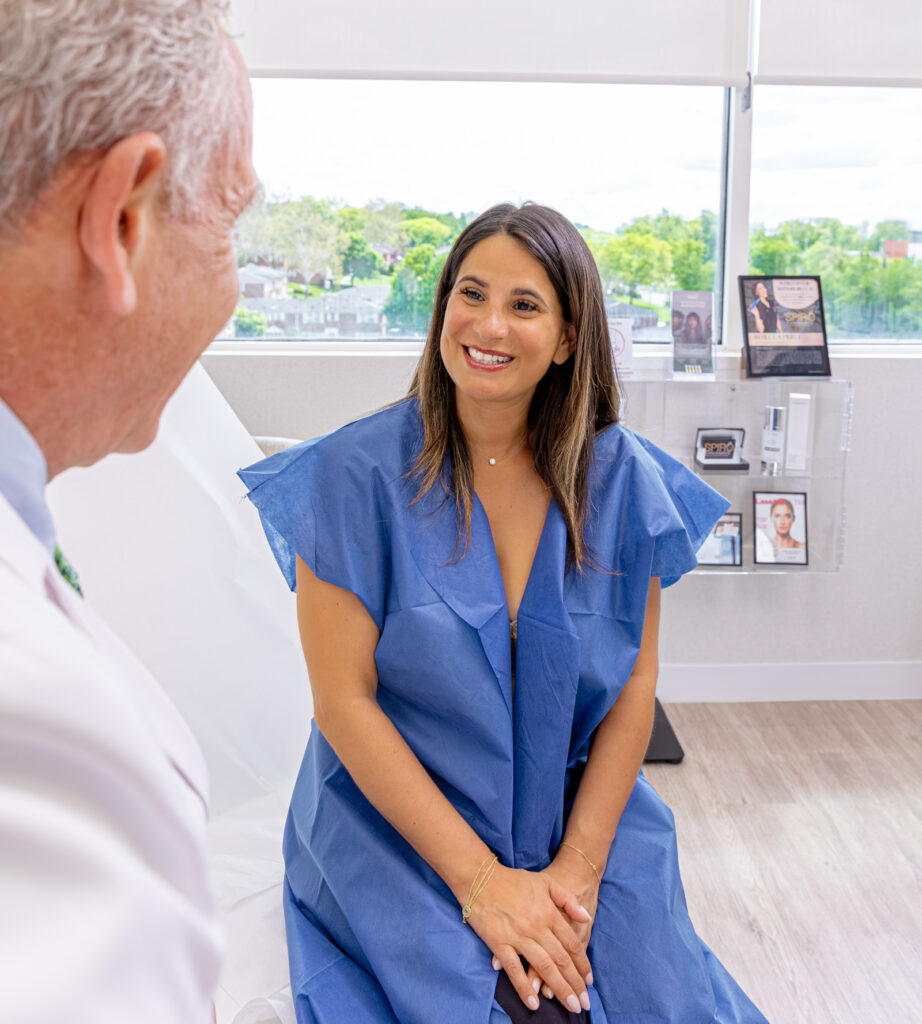
Your journey begins with an in-depth consultation and full-body evaluation. Dr. Spiro considers how significant weight loss has affected the skin, underlying tissue, muscle support, and proportions of each region. Your health history, weight stability, lifestyle, priorities, and expectations are also discussed to establish a clear understanding of what surgery may accomplish.
Your Personalized Surgical Plan
Dr. Spiro develops a cohesive plan based on your anatomy and the transformation you hope to achieve. This includes selecting the appropriate procedures, determining how related areas should be addressed, considering incision and scar placement, and deciding whether surgery is best completed in one operation or thoughtfully sequenced stages.
Surgery & First Stages of Healing
Your transformation continues well beyond the initial recovery period. Through ongoing follow-up, Dr. Spiro evaluates your healing as swelling subsides, scars mature, and the body gradually settles into its new contours. For patients undergoing staged surgery, each subsequent procedure builds upon the progress already achieved, bringing the complete result into view with continuity, balance, and intention.
Continued Recovery & Results
Your transformation continues well beyond the initial recovery period. Through ongoing follow-up, Dr. Spiro evaluates your healing as swelling subsides, scars mature, and the body gradually settles into its new contours. For patients undergoing staged surgery, each subsequent procedure builds upon the progress already achieved, bringing the complete result into view with continuity, balance, and intention.
ARE YOU READY FOR A WEIGHT LOSS MAKEOVER?
Candidacy for body contouring after weight loss involves more than the presence of loose skin. The right time for surgery depends on the stability of your weight, your overall health, and your readiness for the incisions, recovery, and long-term commitment involved in a meaningful transformation. Final candidacy is determined through a personal consultation with Dr. Spiro. He will evaluate your anatomy, health history, weight stability, priorities, and the extent of correction required before recommending the timing and scope of surgery.

You May Be Ready for surgery When:
- Your weight has remained stable and feels realistically maintainable for the long term.
- You are in good overall health and nutritionally prepared for healing.
- You do not currently use nicotine or are prepared to stop before surgery as directed.
- You understand that meaningful body contouring involves scars and recovery.
We May Recommend Waiting When:
- You are still actively losing weight or experiencing major fluctuations.
- Pregnancy or additional significant weight loss may be in your future.
- A health, nutritional, or nicotine-related concern could affect healing.
- You are not yet comfortable with the scars, downtime, or support required.

BODY CONTOURING AFTER GLP-1 WEIGHT LOSS
Reveal the Results of Your GLP-1 Journey
GLP-1 medications have helped many patients achieve meaningful, life-changing weight loss. Yet reaching a new number on the scale does not always produce the body contours they expected. Stretched skin may not fully contract, while the accompanying loss of volume can leave tissues looking deflated, unsupported, or out of proportion with the patient’s new frame.
These changes often affect more than one area. The abdomen may appear loose or overhanging, the breasts may lose volume and support, and excess skin can remain along the arms, thighs, buttocks, back, and lower body. Even after substantial weight loss, these concerns can conceal the body’s underlying shape, affect how clothing fits, and prevent the patient’s reflection from fully representing the transformation they have achieved.
A customized Weight Loss Makeover addresses what weight loss alone cannot. By removing excess skin, restoring support to deflated tissues, and reshaping connected areas of the body, Dr. Spiro works to reveal a smoother, more balanced silhouette that better reflects the patient’s new size and proportions.
Because every body responds differently, there is no standard combination of procedures. Each surgical plan is developed around where skin laxity and tissue deflation remain, how those changes affect the surrounding contours, and which areas should be addressed together to create the most cohesive result.

Recovery varies depending on the combination of procedures performed. Expect swelling, bruising, tightness, and temporary discomfort during the initial healing period.
Dr. Spiro encourages walking early after surgery, but wait to resume strenuous exercise, heavy lifting, and vigorous activities until you receive clearance.
While improvements are visible immediately after excess skin is removed, swelling gradually subsides over the following weeks and months. As your tissues settle, your final body contours become increasingly refined.
A weight loss makeover can provide lasting improvements in body contour, proportion, and comfort. Maintaining a stable weight through healthy nutrition and regular exercise helps preserve your surgical results for years to come.
Because body contouring procedures remove excess skin, scars come as an effect of treatment. Dr. Spiro strategically places incisions to minimize visibility and provides comprehensive scar care guidance throughout your recovery.
Frequently Asked Questions
A Weight Loss Makeover is a personalized approach to body contouring after significant weight loss. It may combine several plastic surgery procedures to remove loose or excess skin, restore tissue support, and improve proportion across multiple areas of the body.
Unlike a single standardized operation, each Weight Loss Makeover is designed around the patient’s anatomy, weight-loss history, concerns, and goals. Dr. Spiro evaluates how the breasts, abdomen, waist, back, buttocks, arms, and thighs relate to one another before developing a cohesive surgical plan. Procedures may be performed together or completed in carefully planned stages.
You may be a candidate for body contouring after weight loss if you have reached a stable, maintainable weight but still have loose skin, tissue deflation, or changes in body proportion that cannot be corrected through diet and exercise.
Candidates should generally be in good overall health, nutritionally prepared for healing, and willing to avoid nicotine as directed. It is also important to understand that excess skin removal surgery requires incisions, recovery, and permanent scars. Dr. Spiro determines candidacy after reviewing your anatomy, health history, weight stability, medications, expectations, and the extent of correction needed.
Your weight should be stable and realistically maintainable before undergoing skin removal surgery after weight loss. The appropriate period varies based on how the weight was lost, whether you are still using weight-loss medication, your nutritional health, and whether additional weight loss is expected.
Patients who have undergone bariatric surgery may require additional time for their weight and nutritional status to stabilize. Significant weight changes after body-contouring surgery can affect the skin, scars, and overall result. During your consultation, Dr. Spiro will evaluate your recent weight history and help determine whether the timing is appropriate.
Body contouring can address loose skin and tissue changes throughout the upper and lower body. Common treatment areas include:
- Abdomen and waist
- Breasts and chest
- Upper and lower back
- Buttocks and hips
- Upper arms
- Inner and outer thighs
- Mons or pubic region
Dr. Spiro does not evaluate these areas in isolation. He considers how excess skin, tissue position, support, and proportion in one region affect the appearance of adjacent areas. This full-body perspective helps create a more balanced and cohesive transformation.
A Weight Loss Makeover may include a tummy tuck after weight loss, body lift, breast lift, arm lift, thigh lift, back lift, buttock reshaping, pubic lift, or targeted liposuction. Breast augmentation or tissue-based breast reshaping may also be considered when weight loss has caused significant breast deflation.
The correct combination depends on where loose skin is located, how the underlying tissue has changed, and which areas are most important to the patient. Some procedures can complement one another in a single operation, while more extensive transformations may be safer and more effective when divided into stages.
A tummy tuck primarily addresses the front of the abdomen. It can remove excess abdominal skin, tighten weakened or separated abdominal muscles when appropriate, and improve the contour of the midsection.
A body lift after weight loss addresses a broader circumference of the torso. Depending on the surgical plan, it may improve the abdomen, waist, hips, lower back, outer thighs, and buttocks. Patients whose loose skin extends around the body may benefit from a lower or total body lift rather than an isolated tummy tuck. Dr. Spiro determines the appropriate approach by evaluating the complete torso and how each area relates to the next.
Yes, certain body-contouring procedures can sometimes be performed during the same operation. Combining complementary procedures may allow Dr. Spiro to address connected areas and create a more unified result.
However, combining every desired procedure is not always appropriate. Surgical time, medical history, the extent of skin removal, recovery demands, and patient safety must all be considered. Dr. Spiro will determine which procedures can reasonably be performed together and which may be better reserved for a later stage.
Some Weight Loss Makeovers can be completed in one operation, while more extensive transformations may require two or more planned stages. Staging can allow each operation to remain focused and may provide appropriate healing time before another area is treated.
The sequence is personalized according to your priorities, anatomy, health, and the relationship between treatment areas. Dr. Spiro considers not only what should be performed, but also the order in which procedures can most effectively build upon one another. If staged surgery is recommended, the complete plan will be discussed during your consultation.
Yes. Patients who have lost weight with GLP-1 medications such as Wegovy, Ozempic, Zepbound, or Mounjaro may be candidates for body contouring after weight loss once their weight and overall health are appropriately stabilized.
GLP-1 weight loss can leave loose skin, tissue deflation, and changes in proportion similar to those seen after bariatric surgery or significant lifestyle-based weight loss. Dr. Spiro will consider your weight trajectory, medication history, nutrition, health, and future treatment plan before recommending surgery. The method used to lose weight does not determine the procedure; your anatomy and remaining concerns shape the surgical plan.
Not every patient must automatically stop taking a GLP-1 medication before surgery. Current perioperative guidance recommends an individualized decision based on factors such as the medication and dose, recent dose changes, gastrointestinal symptoms, medical history, and the planned procedure.
Dr. Spiro, your prescribing clinician, and the anesthesia team will provide specific instructions before surgery. Do not discontinue Ozempic, Wegovy, Mounjaro, Zepbound, or another prescribed medication without medical guidance. It is important to disclose all medications and supplements during your consultation so your surgical team can plan safely.
Incision placement depends on which areas are treated and how much loose skin must be removed. A tummy tuck scar is generally positioned low on the abdomen, while a body lift incision may extend around the waist. Arm lift, thigh lift, breast lift, and back lift procedures each require different incision patterns.
Dr. Spiro plans scars with attention to the correction required, natural body contours, and how incisions may be concealed beneath clothing whenever possible. He will explain the anticipated incision pattern during your consultation. Scars are permanent, but they generally soften and become less noticeable as healing progresses.
Recovery depends on the procedures performed, whether multiple areas are treated, and whether the transformation is completed in one operation or stages. Before surgery, you will receive personalized instructions covering preparation, incision care, activity, compression garments when appropriate, and the support you may need at home.
Follow-up appointments allow Dr. Spiro and his team to monitor your healing and guide your gradual return to normal routines. Because every Weight Loss Makeover is different, your consultation is the best place to receive an accurate recovery timeline for the procedures being considered.
Patients generally return to everyday activities gradually over several weeks, but the timeline varies considerably. Returning to desk work may be possible before returning to physically demanding employment, strenuous exercise, or heavy lifting. More extensive or combined body-contouring procedures may require a longer recovery.
Dr. Spiro will provide activity milestones based on your specific operation and healing progress. Following these recommendations is important because feeling better does not necessarily mean the deeper tissues have finished healing. Activities should only be resumed after you have been medically cleared.
An initial improvement may be visible soon after excess skin is removed, but the result continues to develop as swelling subsides and the tissues settle. Contours generally become more defined over the following months, and different areas may heal at different rates.
Patients undergoing staged body-contouring surgery will see the complete transformation emerge progressively as each phase is completed. Scars also continue to soften, flatten, and mature for a year or longer. Dr. Spiro evaluates results over time rather than judging the final outcome during the earliest stages of recovery.
The results of body contouring after weight loss can be long-lasting when a stable weight and healthy lifestyle are maintained. The excess skin removed during surgery does not grow back, but remaining skin and tissue can still be affected by aging, pregnancy, and future weight fluctuations.
Significant weight gain may stretch the skin and alter the treated contours. Additional weight loss may create new looseness in treated or untreated areas. Patients are therefore encouraged to reach a maintainable weight before surgery and continue healthy long-term habits afterward.
The cost of a Weight Loss Makeover varies because it is not one standardized procedure. Pricing depends on the procedures included, the number of areas treated, whether surgery is completed in stages, operating-room and anesthesia requirements, and the complexity of the surgical plan.
An accurate cost can only be provided after Dr. Spiro evaluates your anatomy and determines which procedures are appropriate. Following your consultation, the office will provide a personalized surgical quote and explain the costs associated with the recommended plan. Cosmetic financing options may also be discussed when available.
Most body-contouring and excess skin removal procedures are considered cosmetic and are not covered by health insurance. Coverage may occasionally be available for a medically necessary procedure such as removal of an abdominal pannus when specific symptoms, documentation, treatment history, and insurance requirements are satisfied.
Coverage varies by insurer and policy, and approval for one procedure does not mean the complete Weight Loss Makeover will be covered. The office can explain which procedures are cosmetic and whether any part of the proposed plan may warrant an insurance review. Patients should also confirm their benefits and requirements directly with their insurance provider.